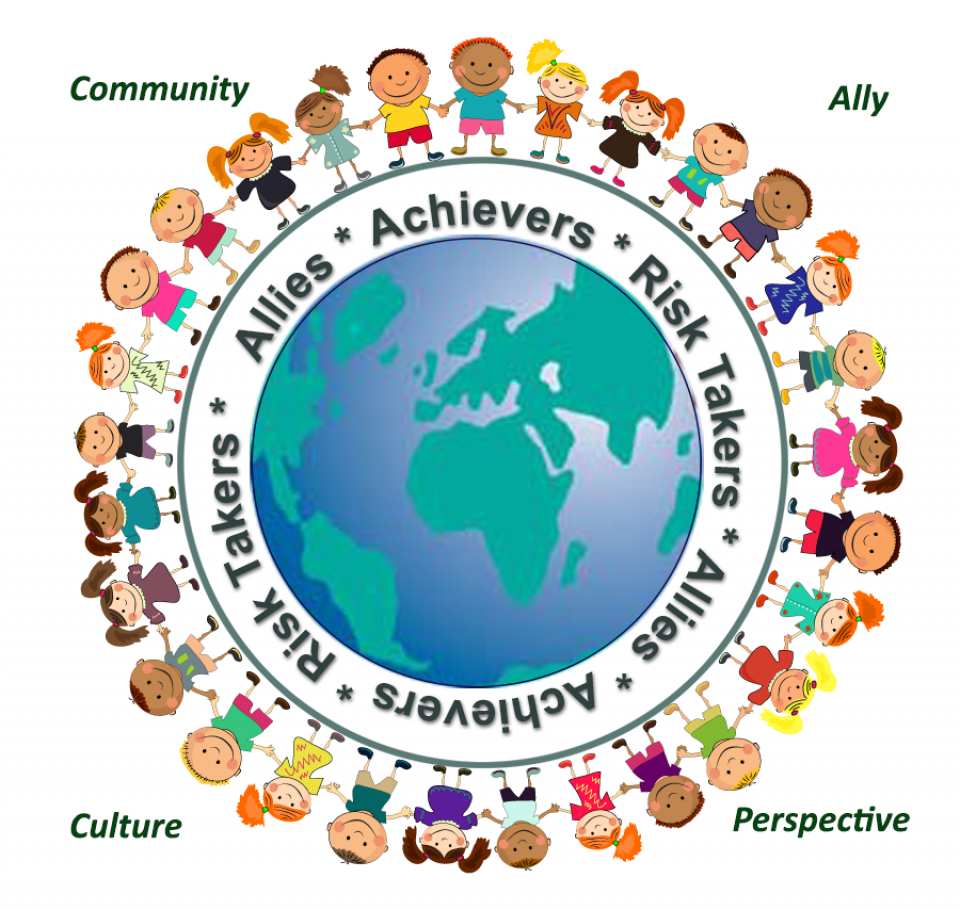
Across the realm not all teachers are waiting for permission from administrators, or the implementation of cultural proficiency components of evaluation tools, to focus on the social-emotional, many are taking action. Likewise, I recognize that not all are either sold on or comfortable with the idea that the subjects and issues that Jan and I put forth are the most important in the quest to get kids to deliver their absolute best. One presenter I remember said that you should never expect 100% buy-in with regards to any idea or programming. You should appreciate 80% if you can attain it. Understood! However, even if we don’t say it or bring it up, children are surrounded by issues related to race, cultural identity, sexual identity, sexual orientation, gender, religion, friendships, popularity, socioeconomic status, ethnicity, privilege, advantage/disadvantage, bullying and so on day in and day out.
If we as adults don’t let children know that we are here to support them, that it is okay to bring up questions about such subject matter, or more important that we know those topics are somehow at play and we see them as important topics for discussion and work, then we are basically telling them that they are on their own, when in our charge. We are telling them that we don’t see these topics as being influential, or we are not there to help them. They need help and we as educators have to be assertive and willing to step out of our comfort zone. We challenge kids to take risks in our classrooms all the time. They may not have the exact answer or all the answers, but we want them to be part of the conversation. The same should go for adults, and especially educators. It may be outside our comfort zone, but we can be a part of the discussion and facilitate on the most basic level. Actually, the same goes for parents and families. There has to be a team approach.
Life experience should have prepared each of us to at least deliver the basic message that bias and prejudice with regards to any of these constructs is wrong and intolerable, and we should be able to say why. The next time it could be you or, if you look at your own cultural identity, one of the groups to which you belong was at one point mistreated or persecuted and we aim to end such mistreatment for all groups is a lesson we should all be able to teach. Lessons from Initiatives for Developing Equity and Achievement for All students (IDEAS which was formerly EMI) and Teaching Tolerance along with taking our course can help if you need it.
I do agree with and value the idea that there are many times when these lessons are best delivered in a cotaught setting or environment. Schools should identify any staff that are available/prepared to support these discussions and pair educators as best they can. It is vital that we address that with which we know kids struggle and focus. These topics are at play all day for them and for us.
Fortunately, I think I have seen far more than the 80% agree that this is important. Most just don’t want to get it wrong. That is valiant, but even those people are far more capable than they give themselves credit for being. If there is any hope that kids will get it right as adults more often than we have then we have to work with them now.
Bill
 allies, achievers, & risk takers